Passion Fruit Varieties: Yellow vs Purple and What Each One's For
Most American operators run 'passion fruit' without thinking about which variety they're getting. But yellow and purple passion fruit are genuinely different fruits. Here's the professional's breakdown.
Passion fruit is one of the most-requested tropical flavors on American bar and dessert menus. Porn Star Martinis, passion fruit curd, passion fruit sorbet, bubble tea passion fruit drinks: they all depend on the fruit. But most operators buy "passion fruit puree" without realizing they're making a varietal choice that affects every drink and dessert on their menu.
There are two commercial passion fruit varieties: yellow (Passiflora edulis f. flavicarpa) and purple (Passiflora edulis f. edulis). They are genuinely different fruits with different applications. Knowing which to spec can transform a menu.
The Two Varieties
Yellow passion fruit (maracuyá, lilikoi)
Larger (the size of a lemon). Bright yellow skin. Tart, aromatic, with a complex acidic profile. Higher juice yield per fruit. The commercial workhorse of the tropical beverage and pastry world.
Purple passion fruit (granadilla)
Smaller (golf-ball sized). Dark purple-black skin that wrinkles when ripe. Sweeter, less acidic, with a rounder flavor profile. Lower juice yield per fruit but more concentrated flavor. More common as fresh whole fruit than as commercial puree.
Both varieties have the same internal structure: a seed-filled orange-yellow pulp that's the actual edible portion. The difference is in the pulp's flavor character and how the fruit behaves in commercial applications.
Flavor: More Different Than You'd Guess
Yellow passion fruit has a bright, very tart, almost citrusy profile, with strong floral and tropical aromatics. Total acid runs 4 to 6% (for comparison, fresh lime is 4-5%). The aromatic compounds include esters that read as "tropical" in a way that's hard to mimic.
Purple passion fruit is sweeter (Brix 14-18 vs yellow's 11-15), less acidic, and more rounded in flavor. The aromatics are less sharp, more candy-like. Some chefs describe it as "passion fruit, but for dessert."
For cocktails where you want passion fruit's signature tart-aromatic profile to cut through vodka, rum, or tequila, yellow is the clear choice. Its higher acid and more assertive aromatics hold up in shaken and stirred builds.
For desserts where passion fruit is being paired with cream, chocolate, or other sweet components, purple's rounder, sweeter profile integrates better. The tart backbone of yellow can fight with dairy and sugar in delicate pastry applications.
Commercial Supply Reality
In commercial foodservice supply, yellow dominates. Most "passion fruit puree" sold through food distributors is yellow passion fruit, sourced primarily from Vietnam, Ecuador, Peru, and Colombia. Vietnamese yellow passion fruit runs particularly aromatic due to the climate and variety selection.
Purple passion fruit is harder to source commercially. It's grown in smaller volumes, primarily for fresh market. When you find purple puree, it's usually more expensive and less consistent in quality.
For an American commercial operator, assume you're running yellow unless you specifically spec otherwise and have found a reliable purple supplier. This is not a problem: yellow is the right choice for 80% of applications anyway.
What We Supply
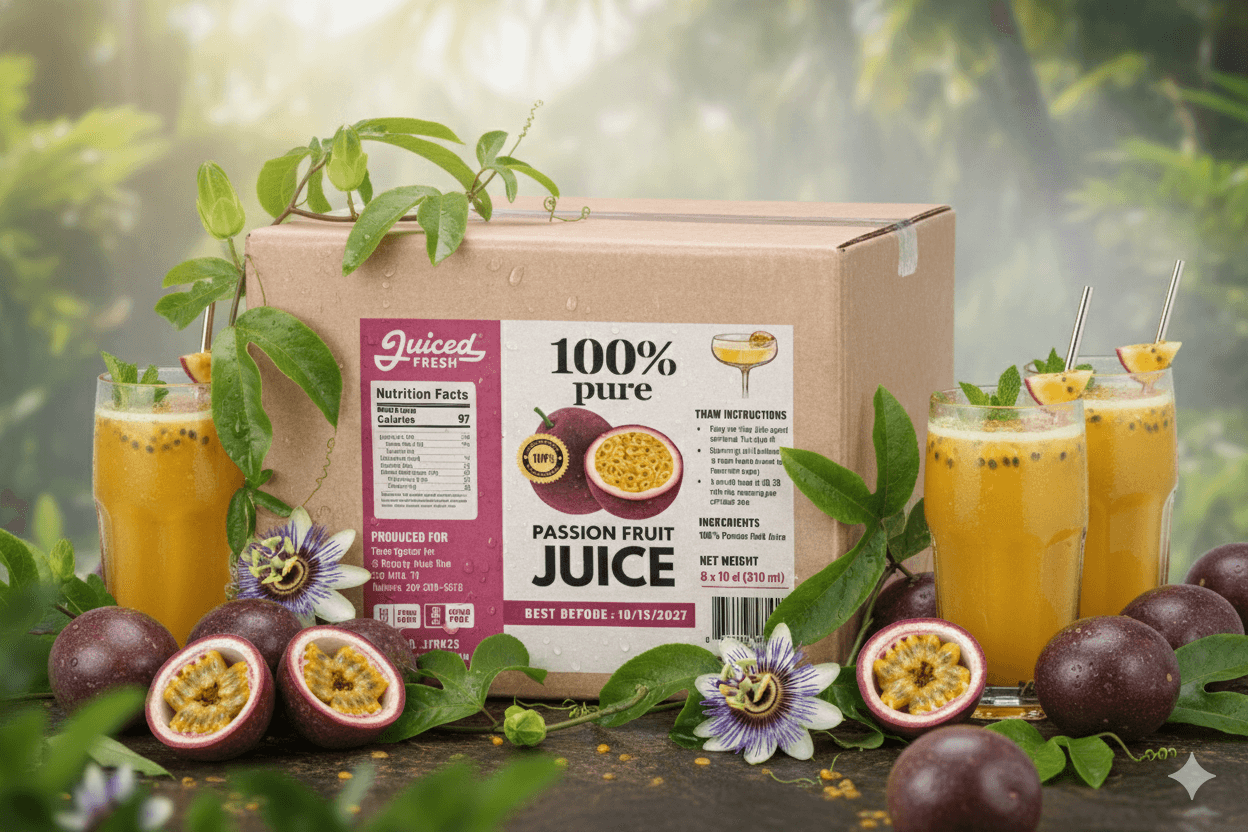
We ship 100% pure yellow passion fruit juice with seeds intact. Sourced from Vietnamese farms, flash-frozen at the press house, shipped frozen to our Austin warehouse, delivered nationwide in 2-5 days.
Pure means pure: no apple juice filler, no added sugar, no water. The ingredient is passion fruit juice. With the seeds: they give cocktails their signature visual identity (seeds floating through a yellow gel is the recognizable "passion fruit cocktail" look), and they add textural pop to desserts.
Where the Seeds Matter
The seeds are a feature, not a bug. They're what differentiate real pure passion fruit juice from concentrate-based products. A Porn Star Martini without seeds looks like a generic yellow drink. A passion fruit tart without seeds looks like lemon curd.
For applications where you need smooth (mousses, glazes, sauces), strain the juice through a chinois. Takes 30 seconds and preserves all the flavor. Keep the seeds for:
- Cocktails (visual identity)
- Rustic tarts and bars (textural contrast)
- Yogurt and parfaits (texture + color)
- Any dessert where the plating benefits from the visible seed pattern
Yellow for Cocktails: The Spec
For most cocktail programs, yellow passion fruit is the variety of choice. Key applications:
Porn Star Martini: The drink that made passion fruit a bar staple. 1 oz passion fruit + 1.5 oz vanilla vodka + 0.5 oz vanilla syrup + 0.25 oz lemon juice, shaken with ice, served with a champagne sidecar. The seeds complete the visual.
Tropical sours: Replace lime 1:1 with passion fruit in any rum, gin, or tequila sour. Rounder, more aromatic, signature look.
Tiki builds: Passion fruit + orange + pineapple + rum for house tiki specs. Passion fruit hurricane variants outperform grenadine-based originals.
Non-alcoholic: Yellow passion fruit + tonic + mint is a legitimate zero-proof menu item.
Yellow for Pastry: The Spec
For pastry kitchens, yellow passion fruit is also the default. Applications:
Passion fruit curd: 1 kg juice + 1 kg sugar + 10 egg yolks + 500g butter, cooked over double boiler to 82°C. Strain if you want smooth. Shelf: 10 days refrigerated. One of the highest-margin pastry SKUs you can run.
Passion fruit tart: Curd in a sable Breton base, torched or glazed. Classic French pastry format, strongest tropical profile.
Mousses and cheesecakes: 15-20% juice by weight in the base. Yellow's acid balances cream and cheese well.
Plate sauces: Reduce juice with equal sugar to syrup. Plate, glaze, fill.
When Purple Is Worth the Trouble
Some applications genuinely benefit from purple's sweeter profile:
- Delicate panna cotta and blancmange where yellow's acid would dominate
- Chocolate desserts where you want passion fruit as a mellow counterpoint
- Fresh fruit plates where purple's rounder flavor integrates with other fruits
- Frozen desserts where you want sweetness without needing to add sugar
For these applications, source fresh whole purple passion fruit if you can find them at a specialty wholesaler, or look for purple-specific puree from Colombian or Brazilian suppliers. Expect to pay 50-100% more than yellow.
FAQ
Is "passion fruit puree" the same as what we sell?
No. Most commercial "passion fruit puree" is 30-40% passion fruit blended with apple juice concentrate, sugar, or water. Ours is 100% single-ingredient passion fruit juice. The flavor impact is completely different.
Can I tell the difference in finished drinks?
Yes. Pure passion fruit juice produces a more aromatic, more complex, less sweet drink than puree-based products. Operators switching from puree to pure juice frequently report customers noticing the change.
How do I pasteurize if needed?
Our juice is already pasteurized and flash-frozen. No additional processing required. For retail bottling, work with a co-packer on acid/pH balance and stability testing.
What's the shelf life?
24 months at 0°F (-18°C) frozen. Once thawed, 5-7 days refrigerated. Don't refreeze.
Can I reduce it to concentrate in-house?
Yes. Reduce yellow passion fruit juice to 1/3 volume for a concentrate suitable for glazes or chocolate inclusions. Refrigerate or refreeze the concentrate.
Published by Juiced Fresh.
Notes from the warehouse, the farm, and the bars we supply. See all Field Notes